The Elusive Quest for Hungary's Vertical Zenith
The human fascination with height is universal. From ancient pyramids to modern-day supertowers, societies have always sought to touch the sky, building structures that awe and inspire. In many countries, identifying the tallest building is a straightforward affair – a widely publicized fact, celebrated in guidebooks and etched into national pride. Yet, when one embarks on a quest to pinpoint **Magyarország Legmagasabb Épülete** (Hungary's Tallest Building), the journey proves to be less of a direct path and more of an intriguing exploration into urban development, architectural heritage, and the very definition of "tallest."
Unlike cities known for their dramatic skylines dominated by a fierce race for vertical supremacy, Hungary's capital, Budapest, and its other major cities present a more nuanced architectural narrative. Here, history and aesthetic preservation often take precedence, creating a cityscape that is breathtaking in its classical beauty but less overt in its pursuit of extreme height. This perhaps explains why finding definitive, easily accessible information on Hungary's true tallest building can feel like an engaging puzzle, a topic sometimes overlooked in mainstream travel guides that prefer to highlight the country's rich historical tapestry over its modern vertical achievements. Indeed, as some sources hint, direct data on this specific query can be surprisingly hard to pin down, making the search for **Magyarország Legmagasabb Épülete** a unique adventure for the curious enthusiast.
Beyond Historic Grandeur: Why Gyula Castle Isn't the Answer
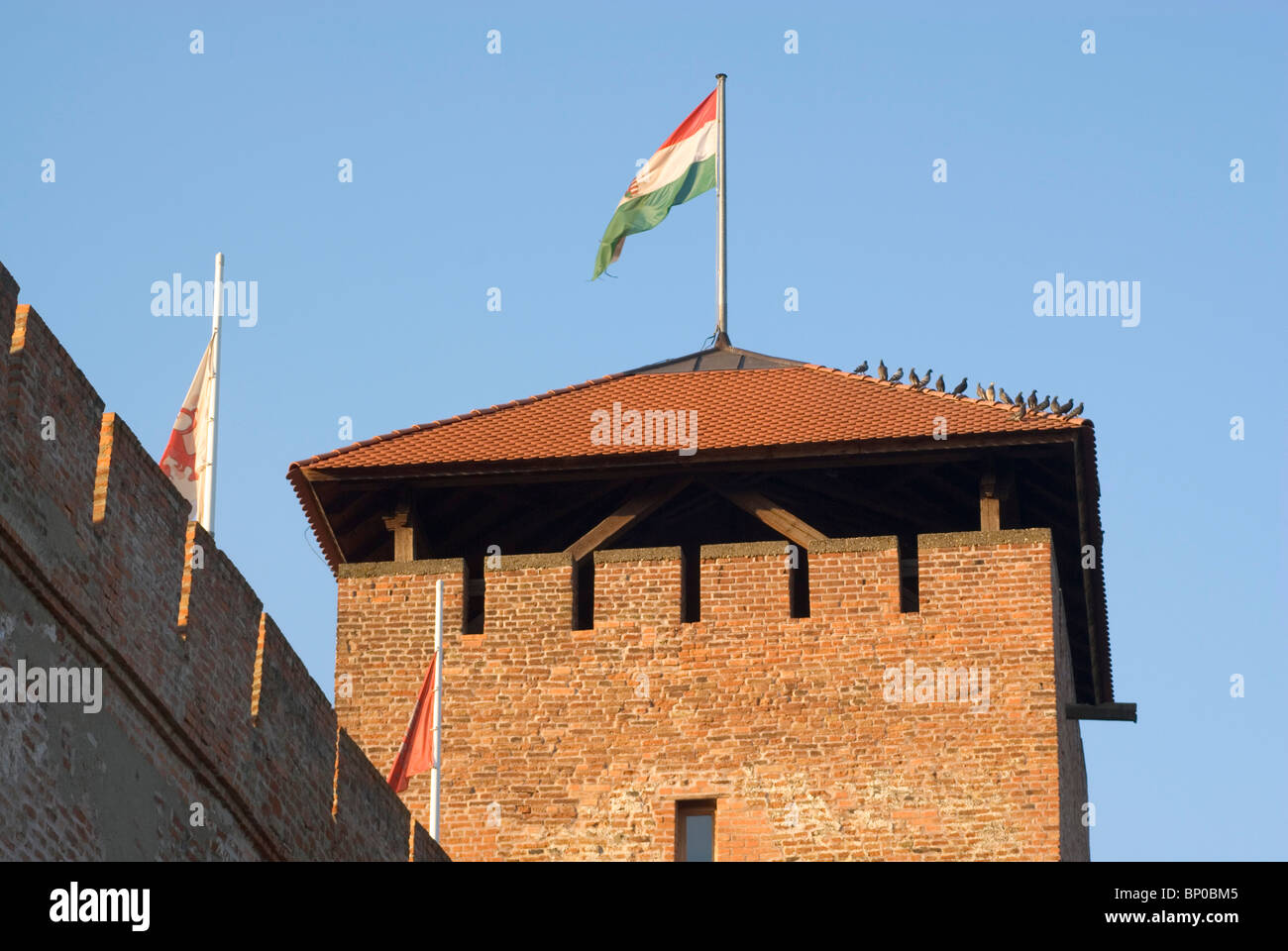
When delving into Hungary's historical structures, iconic landmarks like Gyula Castle inevitably come to mind. Situated in the charming town of Gyula, this medieval fortress is a remarkable testament to Hungary's storied past. As the only brick castle in Central Europe to have survived in its original form, Gyula Castle holds immense cultural and historical significance, attracting countless visitors keen to explore its ancient walls, bastions, and inner courtyards. It's a prime example of "Európa rejtett csodái" (Europe's hidden wonders), offering a glimpse into centuries of Hungarian history, battles, and aristocratic life.
However, despite its impressive stature and historical importance, Gyula Castle does not, by any stretch, qualify as a contender for **Magyarország Legmagasabb Épülete** in the modern sense. While its ancient towers might have once dominated the local skyline, the criteria for "tallest building" in contemporary discourse typically refer to modern, habitable structures designed for residential, commercial, or mixed-use purposes. The juxtaposition of a centuries-old castle with the contemporary query for Hungary's tallest building highlights a fundamental distinction: the appreciation of historical architecture versus the ambition of modern vertical development. Our search takes us beyond such venerable fortresses, into the realm of steel, glass, and contemporary engineering that defines today's high-rises.
Defining "Tallest": A Hungarian Perspective on Vertical Ambition
The question of **Magyarország Legmagasabb Épülete** is not as simple as identifying the structure with the highest point. The definition of "tallest building" itself can be quite complex, leading to different answers depending on the criteria applied. Are we talking about the absolute highest point (including spires, antennas, or flagpoles), the highest occupied floor, or merely the roof height? Furthermore, does "building" refer exclusively to habitable structures, or does it encompass communication towers, chimneys, or other non-residential constructions? In Hungary, particularly in Budapest, these distinctions are critical, given the city's unique architectural regulations and development philosophy.
What Counts as a Building? Navigating the Nuances
Internationally, the Council on Tall Buildings and Urban Habitat (CTBUH) sets widely accepted criteria, often differentiating between:
* **Height to Architectural Top:** This is the most common metric, measuring to the highest architectural element, including spires, but excluding temporary additions like antennas or flagpoles.
* **Height to Highest Occupied Floor:** This considers the highest floor that is continuously accessible to building occupants.
* **Height to Tip:** The absolute highest point of the structure, including all non-architectural elements.
For **Magyarország Legmagasabb Épülete**, the focus is almost always on habitable buildings. This immediately rules out several very tall structures that serve specific, non-residential purposes. For instance, Hungary, like many countries, has numerous tall television and communication towers scattered across its landscape. The Budapest TV Tower or the Kékestető TV Tower (on Hungary's highest peak) are undeniably very tall structures, often reaching greater heights than any conventional building. However, they are generally classified as towers or telecommunication masts, not "buildings" in the architectural sense of providing enclosed, multi-story space for human occupancy. This distinction is crucial for our search.
Historical Context and Urban Planning: Shaping Hungary's Skyline
Hungary's urban development, particularly in Budapest, has historically been guided by a strong commitment to preserving its existing architectural heritage. The city's stunning Pest side, with its grand boulevards and turn-of-the-century apartment blocks, and the hilly Buda side, crowned by the majestic Buda Castle, present a panorama that many wish to protect. For decades, strict building regulations, including height restrictions, were in place to ensure new constructions harmonized with the existing urban fabric, preventing the emergence of jarringly tall structures that might overshadow historical landmarks.
During the socialist era, while some larger, functionalist buildings were constructed, the emphasis was rarely on extreme height. Post-1989, as Hungary transitioned to a market economy, there was a gradual opening up to more modern architectural forms and larger-scale developments. However, the cultural inclination towards respecting historical context remained strong. This has meant that while Budapest's skyline has certainly evolved with new office blocks and residential complexes, it has done so at a more measured pace compared to some other global capitals, often integrating modern designs within existing height parameters.
This cautious approach has contributed to the challenge of immediately identifying **Magyarország Legmagasabb Épülete**, as the "tallest" title hasn't been a primary driver of urban policy or a fiercely contested architectural prize for a long time. For a deeper understanding of these challenges, you might find valuable insights in
Hungary's Tallest Building: A Deep Dive into Scarcity of Data.
The Modern Milestone: Unveiling Hungary's True Vertical Leader
Despite the historical leanings and regulatory complexities, Hungary has indeed begun to embrace modern vertical architecture, recognizing the need for contemporary office spaces and urban regeneration. For many years, various buildings vied for the unofficial title, often depending on whether one counted spires or architectural embellishments. However, in recent times, a clear frontrunner has emerged, unequivocally claiming the title of **Magyarország Legmagasabb Épülete** in the habitable category.
The MOL Campus: Budapest's New Vertical Icon
The answer to our quest for Hungary's tallest building is the **MOL Campus**, the headquarters of the Hungarian oil and gas company MOL Group. Completed in 2022, this impressive skyscraper stands as a beacon of modern Hungarian architecture, significantly reshaping a part of Budapest's cityscape.
* **Height:** The MOL Campus reaches a height of **143 meters (469 feet)** to its architectural top, making it the tallest office building and overall habitable building in Hungary. Its sleek, glass-clad design culminates in a distinctive observation deck and spire, contributing to its iconic silhouette.
* **Location:** Situated in the developing South Buda district, a rapidly modernizing area of the capital, the MOL Campus is part of a larger urban regeneration project, symbolizing a new era for Hungarian corporate architecture.
* **Design and Functionality:** Designed by Foster + Partners and FintaStudio, the building is not only a symbol of height but also of sustainability and modern workspace design. It incorporates innovative technologies and aims for high environmental standards, providing a state-of-the-art working environment for thousands of employees.
* **Impact on Skyline:** The MOL Campus has undoubtedly become a new landmark in Budapest, visible from many parts of the city and offering panoramic views from its upper floors. Its construction marked a significant moment in Hungary's architectural landscape, demonstrating a willingness to blend modern high-rises with the city's established low-rise aesthetic.
While some might point to older structures, or even the spires of the Hungarian Parliament Building or St. Stephen's Basilica, which reach 96 meters (315 feet) and are historically significant for their symbolic height, the MOL Campus now definitively holds the crown for **Magyarország Legmagasabb Épülete** among habitable structures. For more insights into the challenges of identifying such structures, see
The Mystery of Hungary's Tallest Building: Where Are the Facts?.
Tips for Aspiring Skyscraper Spotters in Hungary
For those interested in tracing Hungary's architectural evolution and discovering its tallest structures, here are some practical tips:
* **Focus on Modern Business Districts:** While historical centers are beautiful, new high-rises are typically found in emerging business parks and regenerated industrial areas on the outskirts of major cities, especially in Budapest.
* **Distinguish Between "Building" and "Structure":** Always clarify whether you're looking for a habitable building or just the tallest physical structure, as the answers will differ significantly.
* **Consult Architectural Databases:** Reputable international architectural databases (like the CTBUH or Emporis) are excellent resources for verified height data, though information on countries with fewer supertalls might be less comprehensive.
* **Observe New Developments:** Keep an eye on local news, urban planning announcements, and architectural magazines, which often feature proposals for new projects that could potentially break height records.
* **Visit Observation Decks:** When available (like at the MOL Campus), observation decks offer not just views but also a direct experience of the building's height relative to its surroundings.
Conclusion
The search for **Magyarország Legmagasabb Épülete** reveals more than just a single structure; it uncovers a narrative of a nation balancing deep historical respect with modern urban ambition. While the initial quest might be shrouded in a delightful mystery, leading us through ancient castles and challenging definitions, the emergence of the MOL Campus provides a clear and contemporary answer. This impressive edifice not only stands as Hungary's undisputed tallest habitable building but also symbolizes a forward-looking trajectory for its urban landscape. As Hungary continues to evolve, its skyline will undoubtedly reflect this dynamic interplay, inviting us to keep an eager eye on its future vertical achievements while cherishing its enduring architectural legacy.